Site discovery
Document confined spaces, known gases, communication gaps, device pools, docking stations, hearing protection zones, and shift patterns. The output is a risk and asset map that procurement and safety can both read.
Industrial Scientific service planning starts with the practical details that determine whether gas detection data is trusted: monitor assignment, bump testing, calibration gas, docking location, alarm response, and how supervisors receive information. The service model is built for EHS and operations teams that already have safety procedures in place but need better visibility across dispersed crews, contractors, and high-hazard work areas.
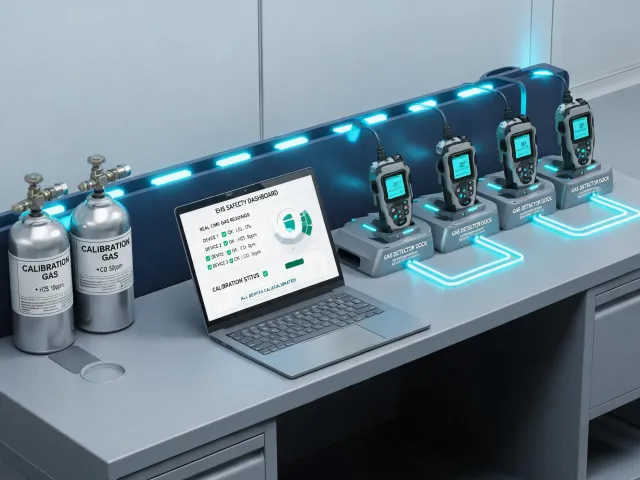
The table below translates common connected safety requirements into service deliverables. It avoids vague promises and gives buyers a clear way to scope monitoring, calibration, and integration work across multiple facilities.
| Gas detection baseline | Review gases, alarm setpoints, LEL percentage, O2 percentage, CO ppm, H2S ppm, and confined-space workflows. The review documents where portable, area, and docking assets fit rather than assuming one monitor suits every job. |
|---|---|
| Docking and calibration | Map docking station placement, cylinder management, bump test expectations, calibration frequency, and exception reporting so crews can maintain records with less manual chasing. |
| Connected dashboard setup | Configure sites, users, alert recipients, data retention, and export routines. Integrations can be mapped for EHS systems, Power BI, work order tools, and procurement dashboards. |
| Training and change control | Build role-based training for workers, supervisors, and administrators. Materials distinguish monitor use, alarm response, docking steps, and reporting review. |
Connected safety projects can stall when hardware, data, and training are treated as separate purchases. This sequence keeps them linked from the first workshop through the final pilot review.
Document confined spaces, known gases, communication gaps, device pools, docking stations, hearing protection zones, and shift patterns. The output is a risk and asset map that procurement and safety can both read.
Define alert recipients, escalation windows, dashboard roles, export formats, and privacy boundaries before live worker data enters daily operations.
Launch a focused group of devices, measure bump completion, alarm handling, lost-device rate, and supervisor adoption, then adjust workflows during weekly reviews.
Use pilot evidence to decide device counts, service cadence, integration priorities, and training updates for a controlled multi-site rollout.
The Industrial Scientific team can return a scoped service plan covering docking, calibration, dashboard roles, data exports, and pilot milestones. Recommendations are framed as program guidance and should be reviewed against your local regulations and competent-person procedures.