Connected safety platform

Connect gas detector data, worker status, and EHS action in one operating model

Industrial Scientific connected safety programs combine portable gas detectors, docking stations, dashboards, and integration planning. The platform page is built for teams that want to pilot live visibility without losing sight of training, local procedures, and competent-person oversight.
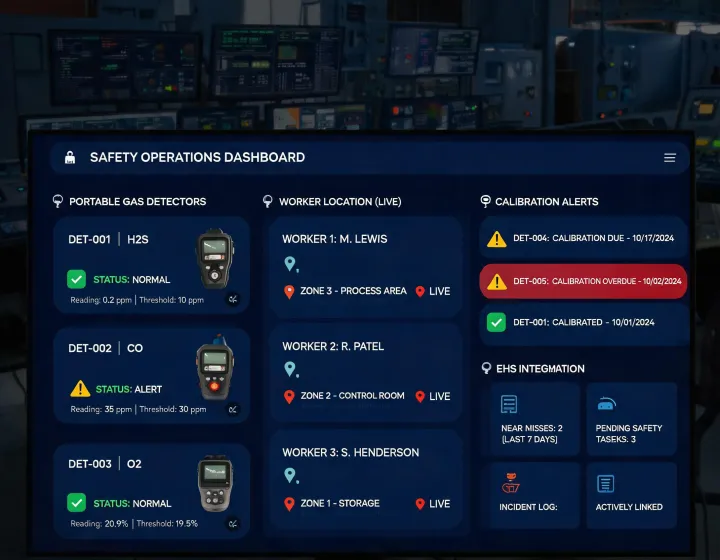
LEL 4.2%Compressor deck, worker notified
O2 20.8%Confined space entry remains in normal range
16 overdueDocking events need supervisor review
Connected gas detection dashboard
SensorGatewayCloudEHS WorkflowAudit Export
Smart PPE hardware portfolio

Hardware roles for live safety data

The portfolio view clarifies how each connected asset contributes to the program. It is not a claim that all hardware is needed at every site; it gives teams a practical menu for pilot design.

Wearable gas monitor

Portable multi-gas devices can support LEL, oxygen, CO, and H2S monitoring with assignment records and alarm context for high-risk work.

Smart hard hat tag

NFC or RFID identity tags can connect a worker, training status, and equipment checkout routine without turning PPE into a surveillance shortcut.

Heat stress wristband

Wearable indicators can help supervisors review heat exposure trends and hydration breaks when paired with site policy and medical guidance.

RFID harness tag

Inspection status, due dates, and assignment history can be linked to fall protection assets so overdue checks are easier to find.

EHS dashboard live demo

View the exceptions that need action

The live demo view focuses on exceptions: active alarms, overdue docking, missing assignments, devices removed from service, and sites that need training refreshers. By designing the dashboard around action rather than decoration, stakeholders can decide who owns each response and how records move into weekly review.

During a pilot, sample alerts should be tested against real shift schedules. If supervisors cannot review the information quickly, the program design needs revision before scaling.

3 active alertsTwo gas alarms, one missed dock
91% readyDevice readiness across pilot pool
24 minMedian supervisor review time
Data integration architecture

From sensor event to business workflow

A connected safety pilot should define how each data point travels. The architecture below shows a practical path from the worker device to systems used by safety, operations, procurement, and analytics teams.

Sensor and wearable
Gateway or dock
Cloud dashboard
SAP, Power BI, Snowflake, ServiceNow
ROI calculator

Estimate documentation time redirected during a pilot

This calculator is intentionally simple. It gives stakeholders a starting estimate for administrative time redirected through better records, not a financial projection.

90 day deployment

Pilot in controlled stages before expanding

Weeks 1-2

Confirm gases, device counts, dashboards, users, alert owners, privacy boundaries, and success metrics.

Weeks 3-4

Deploy devices, docking process, and supervisor training with weekly check-ins for adoption issues.

Weeks 5-9

Track alarms, missed docks, assignment gaps, and reporting time while revising workflows.

Weeks 10-12

Review pilot evidence, integration needs, training updates, and scale decision points.

Book a demo

See how your Industrial Scientific data could flow through a pilot.

Send device counts, gas profiles, sites, and dashboard goals. The demo team can walk through live monitor status, docking records, data export planning, and the checkpoints needed before a broader rollout.